
Blog · best menopause apps · evidence-based menopause information · menopause apps in Africa · menopause apps with evidence-based articles · menopause symptom tracking apps
Menopause Apps With Evidence-Based Articles: A Buyer's Guide
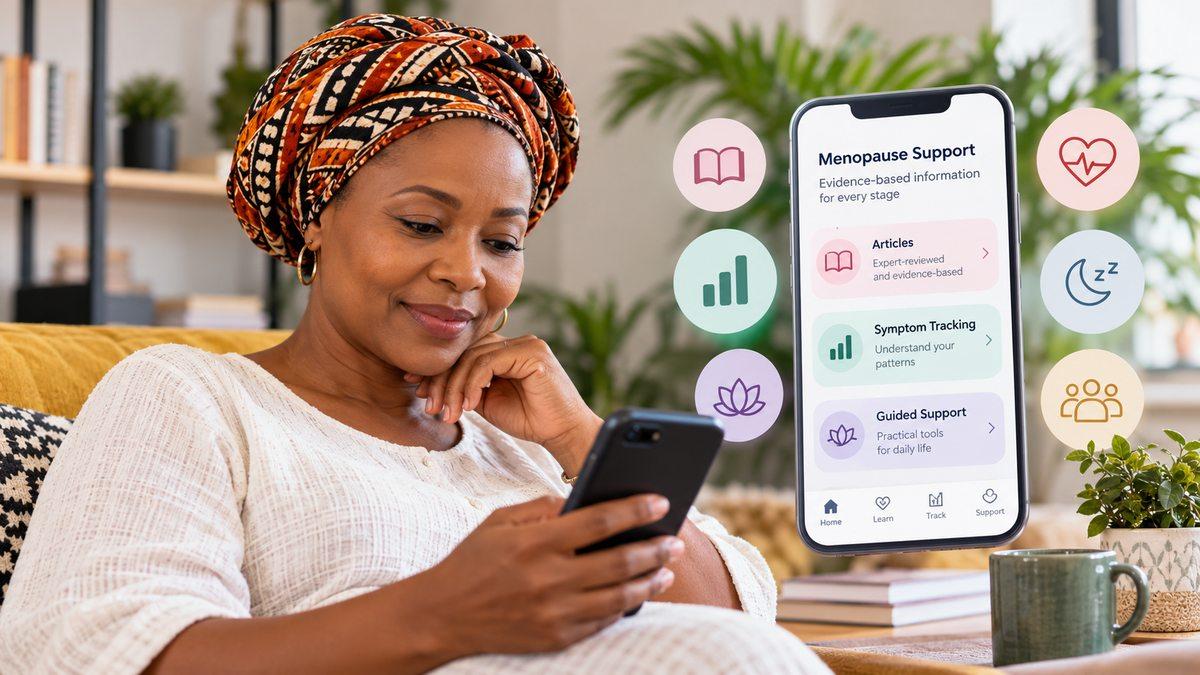
Menopause apps can help women track symptoms, understand changes in their bodies and access health information from a phone. Yet the quality of that information varies. Some services provide articles reviewed by healthcare professionals, while others offer general wellness advice without clearly explaining the evidence behind it.
For women navigating perimenopause, menopause or postmenopause, questions about sleep, hot flushes, menstrual changes, mood and treatment deserve reliable answers. Balance is a useful starting point for those seeking an extensive educational library alongside symptom tracking, while other apps focus on treatment discussions or guided support. This guide explains how to assess article quality, compare app features and consider privacy, cost and availability across Africa.
What Does a Menopause App Actually Do?
Symptom tracking
Many apps allow users to record hot flushes, night sweats, sleep disruption, mood changes and difficulties with concentration. A symptom record may help identify patterns and make conversations with a healthcare professional more specific. Tracking alone cannot establish the cause of a symptom or provide a diagnosis.
Hormone awareness
Educational resources may explain how hormonal changes affect menstrual cycles and symptoms during the menopause transition. An app cannot measure hormone levels simply by recording symptoms. It can support understanding, but it cannot replace a clinical assessment.
Educational articles and guided support
Some apps offer articles, videos, audio resources and practical guidance on sleep, physical activity, sexual health and treatment options. Others include structured programmes or coaching. These features may be useful, but the existence of a programme does not by itself establish clinical effectiveness.
For more context on how digital services may help women access information and support, read Digital Menopause Support in Africa: A Nigeria Case Study.
Why Does an Evidence-Based Article Library Matter?
Reliable articles help readers understand common symptoms, recognise when to seek professional advice and evaluate treatment options. Evidence-based information should draw on credible clinical guidance, peer-reviewed research or appropriately qualified healthcare professionals. It should also acknowledge uncertainty where the evidence is limited.
The number of articles is not the same as their quality. A smaller, accurate and regularly reviewed collection may be more valuable than hundreds of articles without transparent sources. Importantly, an app that publishes evidence-based articles is not necessarily an app whose effectiveness has been demonstrated in clinical trials.
What Does Research Say About App Quality?
A 2019 review of 22 menopause-related apps reported medical professional involvement in 27.3% and evidence-based information in 22.7%. These figures describe the apps assessed at that time, not today’s entire market. See the 2019 review of menopause apps.
A later systematic review of 28 apps found average overall quality of approximately 3.1 out of 5 and information quality of approximately 3.0 out of 5, while identifying gaps in osteoporosis-related information. See the systematic review of menopause apps and osteoporosis. These studies reinforce the need to examine sources and clinical oversight rather than relying on app-store ratings.
What Should an Article Library Cover?
Perimenopause
Look for explanations of cycle changes, sleep difficulties, mood symptoms, contraception and when unusual or heavy bleeding needs assessment.
Menopause
A useful library should explain common symptoms, menopausal hormone therapy, non-hormonal options and strategies for symptoms that affect everyday life. Balanced discussion of potential benefits and risks is essential.
Postmenopause
Longer-term topics include bone health, cardiovascular health, pelvic health, physical activity and ongoing symptom management.
How Can You Assess Article Quality?
Before choosing an app, ask who wrote and reviewed its articles, whether sources are provided, when content was last updated and whether treatment information is balanced. Be cautious of guaranteed results or miracle-cure claims. User ratings can help assess usability but do not establish clinical accuracy.
Privacy, Accessibility and Cost Across Africa
Protecting personal information
Apps may collect sensitive information about menstrual cycles, symptoms, mood and medication. Review the privacy policy to understand what data is collected, whether it is shared, how it is secured and how to request deletion. A published policy alone does not independently establish strong data protection.
Accessibility and regional availability
Consider readability, language, device compatibility, data requirements and whether the service is available in your country. An app offering consultations in one country may provide only educational resources elsewhere. The MAWA article Digital Menopause Support in Africa: A Nigeria Case Study explores some of the wider access considerations.
Subscription costs
Some apps provide free educational content, while others charge for premium features, coaching or clinical care. Check the final price, currency, renewal terms and availability before subscribing. A free trial should not be assumed.
Which Menopause Apps Offer Evidence-Based Educational Resources?
Balance — educational articles and symptom tracking
Balance provides a substantial collection of menopause and hormonal-health resources alongside symptom tracking. Its official website describes evidence-based content and an ORCHA assessment. This makes it a strong starting point for readers prioritising education, without proving that its library is larger or more effective than every alternative. Visit the Balance official website to check current features.
MenoPro — treatment discussions
MenoPro was developed in association with the North American Menopause Society, now The Menopause Society. It was designed to support shared decisions about treatment rather than act primarily as an extensive article library. Current app availability and device compatibility require confirmation.
Midday — guided support
Midday combines menopause information with a guided-support approach. Its current content library, subscription arrangements and availability in African countries should be checked directly before subscribing.
Stella — education within care programmes
Stella offers menopause resources alongside programmes and professional support in certain markets. Access arrangements differ: its UK service connects app access with care services, while some eligible South African members can access a specific programme. Do not assume that a universal free tier is available. See Stella’s official FAQs.
Flo and Clue — broader reproductive-health tracking
Flo and Clue provide cycle-tracking tools and reproductive-health education, including some content relevant to perimenopause. They may suit existing users who want to understand menstrual changes, but are not direct equivalents to specialist menopause education or care services. Consult Flo’s official website and Clue’s official website for current offerings.
Quick Comparison: Educational Focus and Access
| App | Educational focus | Access and cost |
| Balance | Menopause articles and symptom tracking | Free educational content; paid options |
| MenoPro | Guideline-informed treatment decision support | Historically free; availability unconfirmed |
| Midday | Menopause education and guided support | Verify plans and regional access |
| Stella | Education within care programmes | Eligibility and cost vary by market |
| Flo | Reproductive-health articles and cycle tracking | Free and paid features |
| Clue | Reproductive-health education and cycle tracking | Free and paid features |
Features and prices may change. Check each provider’s official listing before making a decision.
Can an App Replace Medical Advice?
No. Apps can help users learn, organise symptoms and prepare questions for appointments, but cannot reliably identify every cause of symptoms or decide which treatment is appropriate. Seek professional advice for unusual bleeding, concerning symptoms or changes that significantly affect daily life.
Menopause can also affect experiences at work. For related practical guidance, see Menopause at Work: How Employers Can Support Workers.
Frequently Asked Questions
Which menopause app has the best evidence-based articles?
Balance is a useful starting point for a substantial educational library alongside tracking. The best choice depends on your needs, content quality and country-specific availability.
Are menopause apps accurate?
Tracking reflects what users enter. The reliability of advice depends on the sources, clinical review and updating process behind it.
Can an app diagnose menopause?
No. An app may help you understand symptoms, but it should not replace clinical assessment or rule out other conditions.
Are free menopause apps safe?
Cost alone does not determine safety. Check privacy practices, information quality and claims for both free and paid apps.
Do menopause apps cover osteoporosis?
Some do, but coverage varies. Look for bone-health information and guidance on when to seek assessment.
Can women across Africa use these apps?
Some educational features may be accessible internationally, but subscriptions, clinical services and payment methods vary by country.
Conclusion
Menopause apps can support learning, symptom records and more informed healthcare conversations. Their value depends on the quality of the information, privacy practices and suitability for each user’s circumstances. Rather than choosing the app with the most articles, prioritise credible sources, understandable guidance and features available where you live.