
Blog · Africa · Digital Menopause Support · Employee Wellbeing · HR · Menopause at Work · Menopause Support · Nigeria · Workplace Wellbeing
Digital Menopause Support in Africa: A Nigeria Case Study


Digital menopause support can make workplace information, guidance and care more accessible and private for employees. But successful implementation requires more than introducing an app or online resource. Employers need to consider trust, privacy, clinical quality, digital access, workplace culture and the practical support available beyond the platform.
Nigeria offers a useful case study. Its large and diverse workforce, growing use of digital services and distinct regulatory and cultural context show why employers need a locally informed approach. The lessons are relevant beyond Nigeria, but they should be adapted to the laws, health systems, languages and workplace realities of each African country.
This guide looks at how employers can assess, introduce and sustain digital menopause support in Nigeria while drawing out wider considerations for organisations across Africa.
What Is Digital Menopause Support?
Digital menopause support refers to technology-enabled information, guidance or services that help people understand and manage perimenopause and menopause. It may include educational resources, symptom tracking, confidential support, virtual consultations, manager resources or signposting to appropriate healthcare.
For employers, the purpose is not to diagnose employees or replace clinical care. It is to make reliable information and appropriate support easier to access while connecting digital resources with workplace adjustments, manager capability and existing wellbeing policies.
The World Health Organization notes that menopause can affect physical, emotional, mental and social wellbeing, and that experiences vary substantially between individuals and contexts. This makes flexibility particularly important when employers design support.
Why Does Digital Menopause Support Matter in African Workplaces?
Digital support can help address a practical challenge: an employee may want information or support without first having to disclose personal symptoms to a manager or colleague.
That privacy can be valuable in workplaces where menopause remains difficult to discuss. A digital route can allow an employee to learn at her own pace, understand possible symptoms and identify what kind of workplace or healthcare support she may want to seek. For a free starting point, employees can use the MAWA Support Hub to explore workplace-focused guidance privately.
However, Africa is not a single workplace or healthcare environment. Digital infrastructure, data costs, healthcare access, languages, employment practices and cultural attitudes vary considerably between and within countries. An approach that works in Lagos may need substantial adaptation for another Nigerian location, and a Nigerian model should not automatically be applied to Kenya, Ghana, South Africa or elsewhere.
This is why local context should be treated as part of implementation, not as an adjustment made after a platform has already been selected.
Why Use Nigeria as a Case Study?
Nigeria illustrates many of the decisions employers need to make when introducing digital menopause support: how to protect sensitive information, how to assess healthcare providers, how to serve employees across different locations and how to introduce a subject that some employees may prefer to keep private.
The Nigerian context also demonstrates an important wider lesson for African employers: digital health support works best when technology is connected to local regulation, credible healthcare pathways and workplace practice.
For organisations operating across several African countries, the Nigerian experience can therefore provide a framework for asking the right questions without assuming that the answers will be identical in every market.
What Should Employers Assess Before Choosing a Digital Menopause Platform?
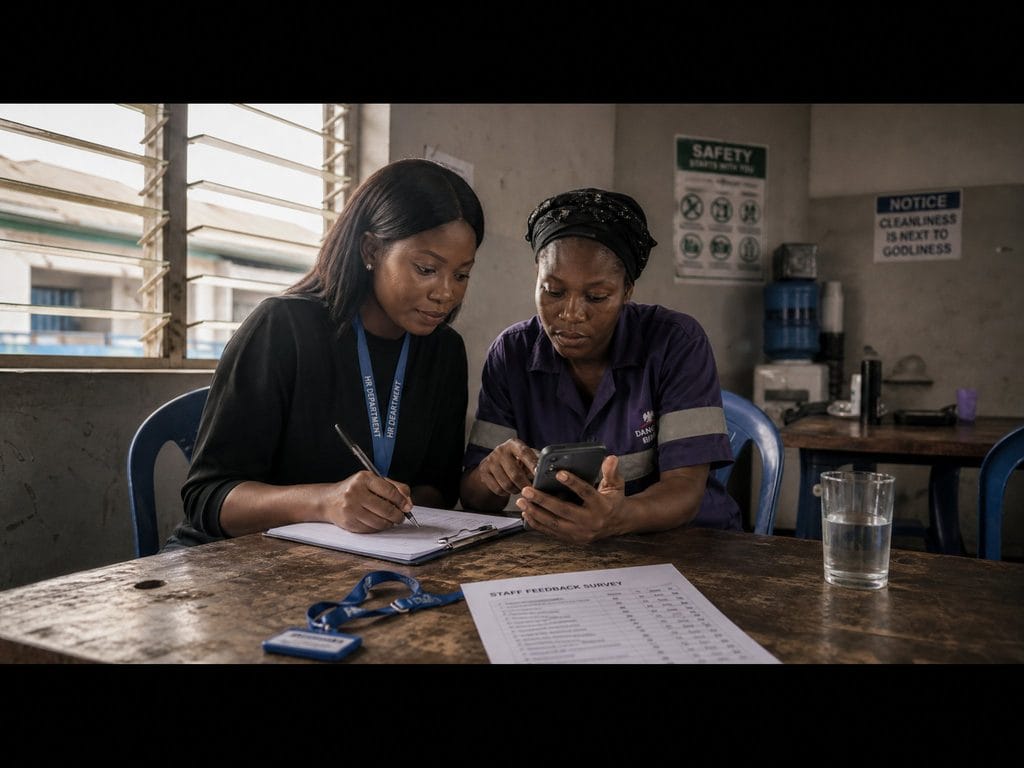
Before selecting a platform, employers should understand what employees actually need and what the organisation is prepared to support.
1. Employee needs and privacy expectations
Begin with confidential listening. An anonymous survey, voluntary focus group or wider wellbeing assessment can help identify whether employees want education, symptom information, clinical access, workplace guidance or a combination of these. Employees preparing for a workplace conversation can also use MAWA’s free African Woman’s Menopause at Work Starter Pack.
Avoid asking employees to disclose diagnoses or intimate health information simply to prove that support is needed. The goal is to understand barriers and preferences while collecting the minimum personal data necessary.
2. Digital accessibility
A platform is only useful if employees can access it reliably. Employers should consider mobile compatibility, bandwidth requirements, data consumption, ease of navigation and whether content remains usable when connectivity is inconsistent.
For geographically dispersed workforces, test the service under the conditions employees are likely to experience rather than assuming that office-level connectivity represents everyone.
3. Language and cultural relevance
Local relevance goes beyond translation. Examples, imagery, terminology and guidance should make sense to the intended audience without reinforcing stereotypes.
In Nigeria, employers may need to consider whether English-only content is sufficient for their workforce and whether additional language or audio options would improve access. The right decision will depend on the organisation’s employees rather than on a single national assumption.
4. Clinical governance
If a platform provides medical consultations or personalised clinical advice, employers should verify the credentials, licensing and scope of practice of the professionals involved.
The Medical and Dental Council of Nigeria regulates medical and dental practice in Nigeria. Employers evaluating a health platform should therefore confirm how the provider verifies clinicians and maintains appropriate professional standards.
5. Data protection and confidentiality
Menopause-related information can include sensitive health data. Employers should understand what information the platform collects, why it collects it, where it is stored, who can access it and what the employer can see.
Nigeria’s data protection framework requires organisations to take data protection seriously, particularly where sensitive or health-related information and digital technologies are involved. Employers should conduct appropriate due diligence and obtain legal or data-protection advice where necessary.
Employees should also receive a clear explanation of the boundary between personal platform use and employer reporting. Aggregate utilisation information may help an organisation evaluate a service, but individual health information should not become a workplace performance tool.
How Can Employers Implement Digital Menopause Support Effectively?
A strong implementation connects the digital resource to the wider employee experience.
Start with a clear purpose
Define what the organisation is trying to improve. Is the priority better access to trusted information? More confident managers? Easier signposting to healthcare? Reduced barriers to requesting workplace adjustments?
A clear purpose makes it easier to select the right service and measure whether it is helping.
Involve employees before launch
Employees can identify barriers that procurement teams may miss. Invite a representative group to test accessibility, tone, navigation and usefulness before a full rollout.
Participation should be voluntary, and feedback mechanisms should protect confidentiality.
Prepare managers
A digital platform does not remove the need for human support. Employees may still approach a line manager about concentration, sleep, temperature, fatigue, working hours or another issue affecting their work.
Managers do not need to become menopause specialists. They do need to know how to listen, avoid assumptions, discuss work impact, explore reasonable options within organisational policy and agree when to review an adjustment. MAWA’s free Manager’s First Conversation Guide provides a practical structure for that conversation.
Connect the platform to workplace policy
Digital menopause support should sit alongside relevant wellbeing, sickness absence, flexible working, occupational health and inclusion policies.
Employees should know where to go if digital information leads them to seek a workplace adjustment or a conversation with HR. Without that connection, the platform risks becoming an isolated resource rather than part of a functioning support system.
Communicate privacy clearly
Before launch, explain what is confidential, what data the employer receives and what employees can use without informing a manager.
Trust is particularly important for a health topic that employees may regard as personal. Privacy information should therefore be easy to find and understand rather than buried in technical documentation.
Pilot before scaling
A pilot can reveal issues with access, language, navigation, manager readiness and employee trust before a wider rollout.
Use the pilot to collect qualitative feedback as well as usage data. Low usage does not automatically mean low need; it may indicate that employees do not understand the service, do not trust its privacy arrangements or do not see how it connects to practical workplace support.
What Should Employers Measure?
Downloads and registrations can show reach, but they do not demonstrate impact on their own.
Employers can consider a balanced set of measures, including:
• awareness of the available support;
• employee confidence in finding reliable menopause information;
• manager confidence in responding appropriately to workplace conversations;
• use of relevant resources or services;
• employee feedback on accessibility and privacy;
• requests for workplace adjustments, where this can be monitored without compromising confidentiality; and
• whether employees believe the organisation’s support has become easier to access over time.
Where possible, collect data in a way that protects anonymity. Small employee groups can be especially easy to identify unintentionally, so reporting should avoid overly detailed breakdowns.
What Can Other African Employers Learn From the Nigerian Context?
The most transferable lesson is not that other African countries should copy a Nigerian model. It is that implementation should be locally grounded.
Across different African markets, employers can use the same core questions:
• Is the information clinically credible?
• Does the service comply with applicable national data protection and healthcare requirements?
• Can employees access it with the devices and connectivity available to them?
• Does the language and content reflect the workforce it is intended to serve?
• Do employees trust the privacy model?
• Are managers prepared for conversations that may follow?
• Is there a clear route from digital information to practical workplace support?
The answers will vary by country and organisation. That variation should be expected.
Digital Support Should Complement, Not Replace, Workplace Change
Technology can lower barriers to information and provide a private first step. It cannot, by itself, create a supportive workplace.
An employee may understand her symptoms better after using a digital resource and still face difficulty if her manager dismisses a request for flexibility. A platform may provide excellent information and still have limited impact if organisational policies do not allow practical adjustments.
For this reason, employers should treat digital menopause support as one part of a wider approach that includes awareness, manager capability, appropriate policies, confidentiality and access to credible healthcare.
Frequently Asked Questions About Digital Menopause Support in Africa
What is digital menopause support in the workplace?
Digital menopause support uses online tools or services to provide employees with menopause information, guidance, symptom resources, signposting or access to professional support. It should complement, rather than replace, appropriate healthcare and workplace adjustments.
Can digital menopause support work across Africa?
Yes, but it should not be implemented as a single uniform model. Employers need to adapt support to national regulation, healthcare systems, digital access, language, culture and workforce needs.
Why is Nigeria useful as a case study?
Nigeria provides a useful example because employers must navigate a diverse workforce, digital-access considerations, health-professional regulation, data protection and differing levels of menopause awareness. These considerations can help employers elsewhere ask better implementation questions, even where the specific answers differ.
What should employers look for in a menopause platform?
Employers should assess clinical credibility, data privacy, accessibility, cultural relevance, user experience, reporting practices and how the platform connects employees to appropriate workplace or healthcare support.
Should employers have access to employees’ menopause health data?
Employers should be cautious about collecting or accessing individual health information. The platform should clearly explain what data is collected and shared, and employers should seek appropriate data-protection advice. Evaluation can often rely on aggregated or anonymised information rather than individual health records.
Does a digital platform replace manager training?
No. Employees may still need workplace adjustments or conversations about how symptoms affect work. Managers should be prepared to respond respectfully, focus on work impact and follow organisational policy without attempting to diagnose employees.
Conclusion: Building Digital Support Around People
Digital menopause support can give employees a more private and accessible route to information and help, but technology is only one part of effective workplace support.
The Nigerian context shows why employers should look beyond the platform itself. Privacy, clinical governance, digital access, cultural relevance, manager capability and workplace policy all influence whether employees will trust and use the support available.
For employers elsewhere in Africa, the principle is the same: start with the workforce, understand the local context and build digital support into a wider system of practical workplace action.
MAWA supports employers and employees in building more informed, supportive menopause-inclusive workplaces across Africa. Organisations reviewing their current approach can use the MAWA Employer Readiness Check to identify strengths, gaps and practical next steps.