
Article · Inclusive Workplaces · Menopause and Employment · Menopause at Work · Menopause at Work Africa · Menopause Awareness · Menopause Support · NHS Health Check · Perimenopause · women's health · Workplace Wellbeing
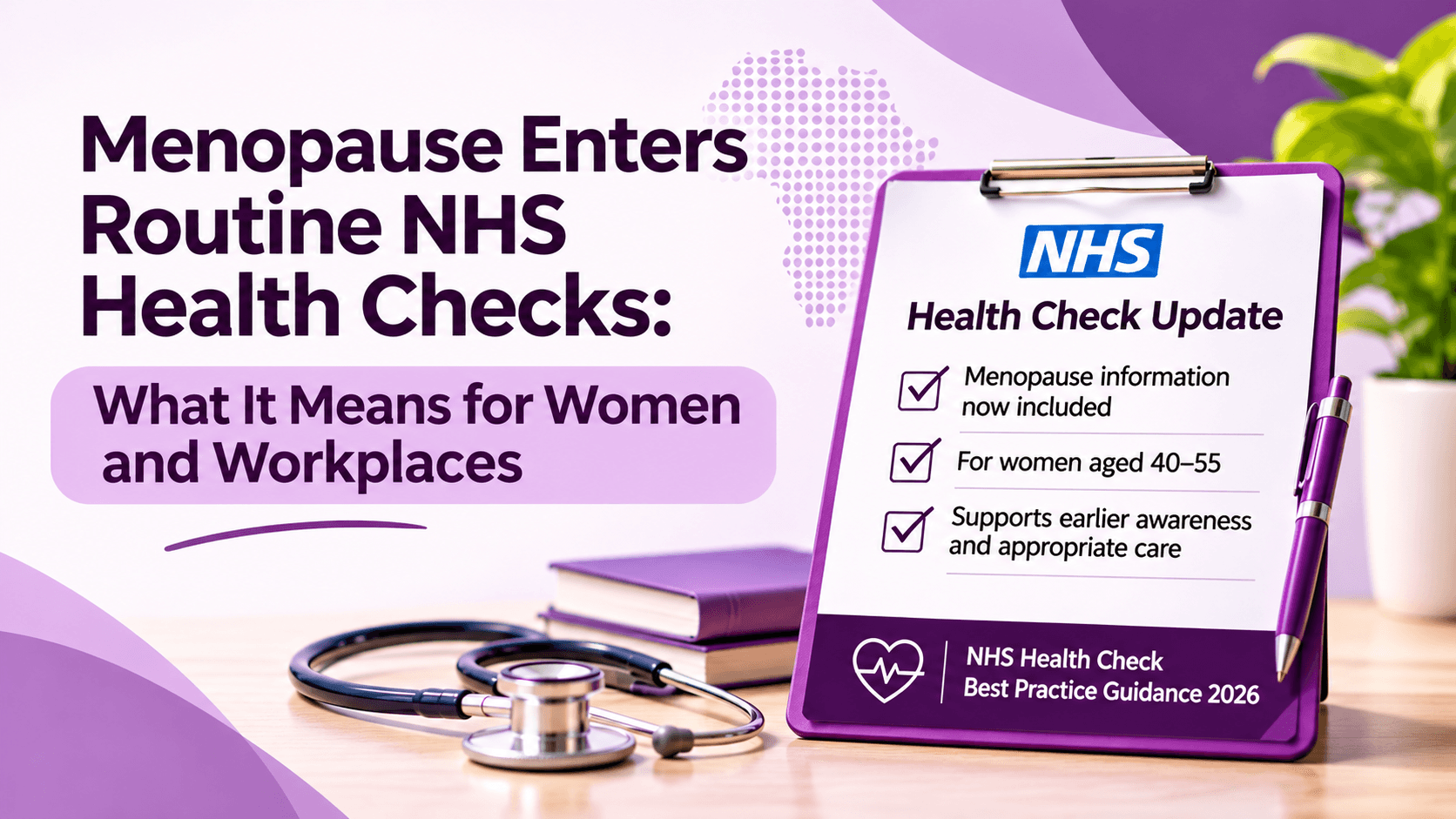
Menopause Enters Routine NHS Health Checks: What It Means for Women and Workplaces
UK Women’s Health Update | November 2026
Menopause is becoming a more visible part of preventative healthcare in England.
The NHS Health Check Best Practice Guidance has been updated for 2026, supporting the introduction of menopause information for eligible women aged 40–55.
The development follows a government announcement in October 2025 that menopause advice would become part of routine NHS Health Checks.
What does this mean for women and workplaces?
The update creates another opportunity for women to recognise menopause symptoms, access trusted information and understand where to seek appropriate support. For employers, it reinforces the importance of creating workplaces where menopause-related health needs can be addressed sensitively and practically.
What Has Changed in NHS Health Checks in 2026?
The NHS Health Check is a free preventative health programme in England, generally offered every five years to eligible adults aged 40–74. It helps identify risks associated with conditions such as heart disease, stroke, type 2 diabetes and kidney disease.
The 2026 update supports the introduction of menopause information into a programme that has traditionally focused on cardiovascular and metabolic health.
The Department of Health and Social Care announced that the change could help up to five million eligible women aged 40–55 over a five-year period, if everyone eligible attended their NHS Health Check.
Local authorities are responsible for implementing the updated approach through NHS Health Check providers.
What Menopause Information Can Women Expect During NHS Health Checks?
The menopause component is intended to improve awareness of perimenopause and menopause, including common symptoms, available support and when to seek further medical advice.
Women may be directed towards trusted information about:
- Hot flushes and night sweats.
- Sleep difficulties, fatigue and changes in mood.
- Problems with concentration and memory.
- Joint pain and other physical symptoms.
- Treatment and symptom-management options.
- Longer-term health considerations, including cardiovascular and bone health.
These conversations can help women recognise changes they may be experiencing and encourage appropriate follow-up with a qualified healthcare professional.
Importantly, the addition does not mean that every NHS Health Check will include a comprehensive menopause assessment or that every woman will automatically receive treatment. The programme is intended to support awareness and appropriate signposting, while individual assessment and treatment decisions remain matters for clinical care.
Implementation may also vary between local authorities as the updated approach is introduced.
Women who want to explore symptoms in greater detail can consult the NHS guidance on menopause and perimenopause.
Why Does This Matter for Women?
For many women, perimenopause begins while they are actively building careers, managing teams, running businesses or balancing demanding responsibilities.
Symptoms such as disrupted sleep, hot flushes, fatigue, joint pain and difficulty concentrating can affect everyday life, including work.
Yet recognising these symptoms and understanding available treatment options is not always straightforward.
Introducing menopause information into routine health checks creates another opportunity for women to receive trusted advice, recognise symptoms and seek appropriate clinical support.
How Can Better Menopause Awareness Help Women?
Perimenopause is the transitional stage leading up to menopause, when hormonal changes may cause symptoms and changes in menstrual patterns.
Menopause usually occurs between the ages of 45 and 55, although some women experience it earlier.
Experiences vary considerably. Some women have mild symptoms that do not significantly affect daily activities, while others experience difficulties that interfere with sleep, wellbeing or work.
Recognising possible symptoms can help women understand when to seek medical advice rather than dismissing changes as simply part of ageing or everyday stress.
The NHS guide to menopause symptoms explains the different ways perimenopause and menopause can affect daily life.
Better awareness does not guarantee an earlier diagnosis, but it can help women have more informed conversations with healthcare professionals.
Why Does Menopause Awareness Matter for Long-Term Health?
Menopause is not only about managing immediate symptoms.
Hormonal changes during midlife can affect bone health, while cardiovascular risk also becomes increasingly important with age.
This makes preventative healthcare conversations valuable for discussing wider health considerations, including blood pressure, cholesterol, physical activity and individual risk factors.
The NICE guideline on menopause identification and management provides evidence-based recommendations on menopause care and treatment options.
Access to reliable information can help women make informed decisions about their health and seek individualised support where needed.
What Does This Mean for Employers?
Although this development concerns healthcare rather than employment legislation, it raises an important question for organisations:
If menopause is increasingly recognised as part of preventative healthcare, how effectively are workplaces supporting employees experiencing it?
Menopause experiences differ, and not every employee will need additional support. However, workplace conditions, management practices and organisational policies can influence how easily symptoms are managed during the working day.
Employers can take practical steps by:
1. Provide Access to Reliable Menopause Health Information
Employers can make trustworthy menopause information available through internal communications, wellbeing programmes and employee resource platforms.
Resources from the NHS and recognised clinical organisations can help employees understand possible symptoms and identify where to seek professional advice.
Information should be accessible, evidence-based and relevant to employees experiencing menopause at different ages and stages.
2. Train Managers to Respond Sensitively
Managers are often the first point of contact when employees experience difficulties at work.
Appropriate training can help them listen without judgement, respect confidentiality, avoid assumptions and explore suitable workplace support.
Acas guidance on talking with workers about menopause recommends private conversations that allow employees to decide how much personal information they wish to share.
Employees should also have access to an alternative contact, such as HR or an appropriately trained wellbeing representative, if they are uncomfortable speaking directly with their manager.
3. Review Workplace Adjustments and Flexible Working
Practical workplace adjustments can help some employees manage symptoms more comfortably.
These do not always require major organisational changes or significant expenditure.
| Workplace difficulty | Possible support |
| Hot flushes and temperature sensitivity | Better ventilation, fans or temperature control |
| Fatigue following disrupted sleep | Flexible start times or adjusted schedules |
| Concentration difficulties | Quiet working spaces or flexibility around demanding tasks |
| Physical discomfort | Access to drinking water, rest areas and suitable facilities |
| Symptoms affecting attendance | Supportive absence procedures and individual discussions |
The most appropriate arrangements will depend on individual circumstances and job requirements.
Acas guidance on supporting workers through menopause also encourages employers to consider how working conditions, including temperature, uniforms, shift patterns and access to facilities, may affect symptoms.
4. Make Support Accessible Without Unnecessary Disclosure
Menopause is a personal health matter, and employees may have different levels of comfort when discussing their experiences.
Some may worry about stigma, confidentiality or how disclosure could affect perceptions of their professional capabilities.
Employers should provide clear, confidential ways to request support without requiring unnecessary disclosure of personal medical information.
The focus should remain on understanding work-related difficulties and identifying appropriate solutions.
5. Signpost Employees to Professional Medical Advice
Workplace support should complement, not replace, appropriate healthcare.
Managers and HR professionals should not be expected to diagnose menopause or recommend medical treatment.
Instead, employers can help employees identify reliable information and understand how to access GP services, occupational health support or other qualified healthcare professionals.
The NHS menopause treatment guidance provides information on available treatment approaches and the importance of discussing individual options with a healthcare professional.
What Are UK Employers’ Responsibilities Around Menopause?
The NHS Health Check update does not itself introduce new employment legislation or require every employer to create a standalone menopause policy.
However, menopause-related workplace concerns may fall within existing UK equality, employment and health and safety obligations.
Menopause is not a separate protected characteristic under the Equality Act 2010. Nevertheless, unfavourable treatment connected with menopause symptoms may constitute discrimination in certain circumstances, including where age, sex or disability protections apply.
Where symptoms meet the legal definition of disability, employers may also have a duty to make reasonable adjustments.
The Acas guidance on menopause and discrimination explains how these responsibilities can apply.
Separately, the Employment Rights Act 2025 introduced menopause and gender pay gap action plans for larger employers. These developments are distinct from the NHS Health Check announcement.
For organisations, the practical priority is to review existing policies, understand relevant legal responsibilities and ensure employees can access appropriate support.
The Opportunity for More Inclusive Workplaces
At Menopause at Work Africa (MAWA), we believe menopause support should connect health awareness with practical workplace action.
Better awareness can help women understand their experiences. Supportive workplaces can help ensure those experiences do not unnecessarily interrupt careers or undermine confidence.
As the UK strengthens menopause awareness within preventative healthcare, employers have an opportunity to examine their own readiness.
This can begin with straightforward actions: reviewing workplace policies, equipping managers to respond sensitively, improving access to reliable information and making reasonable adjustments where appropriate.
It also means recognising that menopause experiences are not identical. Individual health circumstances, cultural expectations, working conditions and access to support can influence what employees need.
For employers, this is also relevant to retaining experienced talent. Women navigating midlife may hold significant professional knowledge, leadership responsibilities and organisational expertise.
Creating a supportive environment can help reduce avoidable barriers to their continued participation and progression at work.
The goal is not simply to raise awareness, but to translate that awareness into consistent, respectful workplace practices.
Frequently Asked Questions
Are Menopause Checks Now Part of NHS Health Checks in England?
Menopause information is being introduced into the NHS Health Check programme under the 2026 guidance for eligible women aged 40–55. Implementation may vary between local areas.
Does an NHS Health Check Diagnose Menopause?
No. The menopause component is intended to improve awareness and provide information about symptoms and available support. It does not replace an individual clinical assessment.
Does the NHS Announcement Mean UK Employers Must Introduce a Menopause Policy?
No. The NHS announcement does not create a new legal requirement for every employer to introduce a standalone menopause policy. However, employers should consider their existing equality, employment and health and safety responsibilities.
Conclusion: Turning Menopause Awareness Into Workplace Action
The inclusion of menopause information in NHS Health Checks is an important development in how women’s midlife health is recognised within preventative healthcare in England.
For women, it offers another opportunity to understand symptoms and seek appropriate advice.
For employers, it reinforces the importance of creating environments where employees can access information, discuss concerns confidentially and receive practical support where needed.
At MAWA, we believe that meaningful menopause inclusion begins with awareness but must extend into workplace policies, management practices and everyday experiences.
Because recognising menopause is important. Creating workplaces that respond appropriately is equally important.
Sources: NHS Health Check Best Practice Guidance 2026; Department of Health and Social Care, October 2025; UK Parliament, November 2025; NICE guideline NG23; NHS menopause guidance; Acas menopause-at-work guidance.
This article provides general information and is not a substitute for individual medical or legal advice.