
Blog · Digital Menopause Support · Menopause Apps · menopause apps in Africa · menopause coaching · menopause coaching apps · menopause symptom tracker
Menopause Coaching Apps: How They Work, Costs and Features
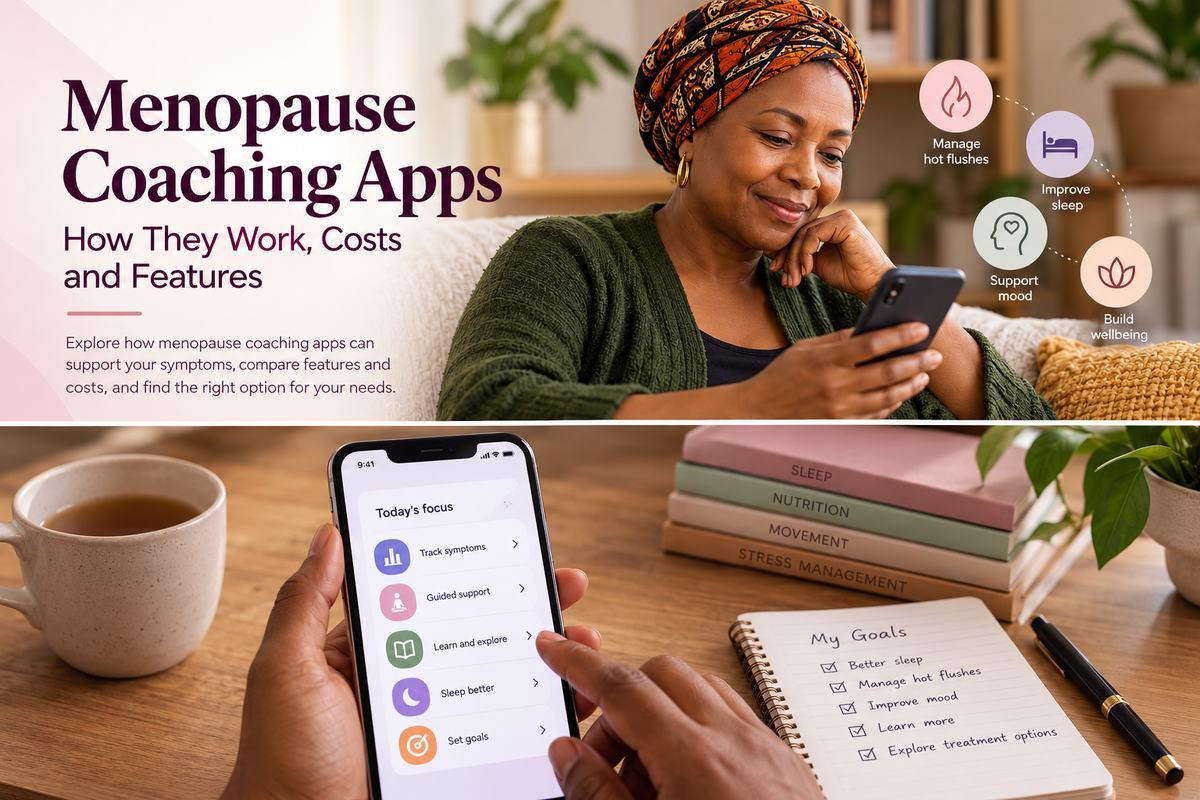
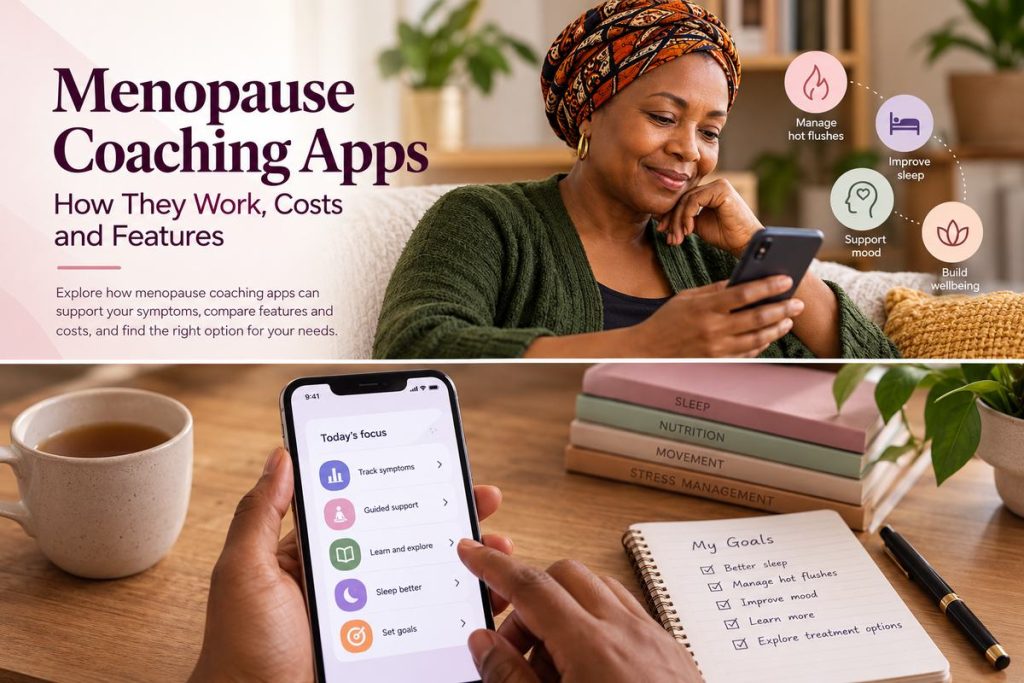
Changes in sleep, mood, concentration and temperature regulation can make perimenopause and menopause difficult to navigate, particularly when reliable guidance is hard to find. Menopause coaching apps offer one way to access information and support from a phone. Some help women track symptoms and recognise patterns, while others provide cognitive behavioural therapy (CBT) exercises, lifestyle coaching, AI-guided responses or access to healthcare professionals.
For women across Africa, the usefulness of these tools also depends on where they live and what support is available locally. Access to menopause-informed care, reliable internet, payment options and clinical services differs between countries, and an app that offers helpful information may not provide treatment or consultations in every location. Understanding these differences is important before choosing a service. This guide explores how menopause coaching apps work, what the research says about their effectiveness, how their features and costs compare, and what to consider before subscribing.
What Are Online Menopause Coaching Apps?
Although they are often grouped under one label, menopause apps generally fall into three categories. Understanding the difference helps users choose a service that matches their needs.
Symptom-tracking apps
Tracking apps allow users to record symptoms such as hot flushes, sleep disruption, mood changes and menstrual patterns. Over time, the records may help identify patterns and provide useful information for a medical appointment. A review of menopause apps examined the types of tracking and visualisation features available. Tracking can support understanding, but it is not a treatment in itself.
CBT-based digital programmes
Some programmes use structured CBT exercises to help users manage the impact of hot flushes, sleep difficulties and associated distress. CBT does not necessarily stop a hot flush from occurring; it can help reduce the disruption and discomfort associated with symptoms. Evidence for a particular digital programme should be assessed separately from evidence for CBT more broadly.
Human and AI-supported coaching
Other platforms provide educational coaching, access to nurses or health professionals, or AI-guided responses to common questions. Some also connect users with licensed clinicians who can assess symptoms and discuss treatment. The distinction matters: an AI coach or general wellness adviser cannot independently diagnose a condition or prescribe medication. Before paying, check who provides the support, what qualifications they hold and whether clinical services are available in your country.
Do Menopause Coaching Apps Actually Work?
Evidence is encouraging for some structured digital interventions, but it does not establish that every menopause app works. A 2026 systematic review and meta-analysis of 18 randomised trials involving 1,926 participants found a modest reduction in hot-flush frequency and improvements in sleep quality, although certainty differed across outcomes. A six-week randomised trial of Caria involving 149 participants reported lower hot-flush severity at six weeks compared with an educational control. The short duration and specific study populations limit how broadly these findings can be applied.
Observational evidence adds another perspective. A study of 1,900 Health & Her users found that greater engagement was associated with reduced self-reported symptoms over two months. Because it was not a randomised trial, it cannot establish that the app caused those improvements. Symptom records may also help users describe changes during appointments, but they do not replace clinical assessment.
There are important limitations. App quality, clinician involvement, accessibility and privacy practices vary. Much of the published evidence comes from outside Africa, and findings may not fully reflect the diversity of healthcare systems, languages, connectivity, costs and users’ needs across the continent. The strongest approach is to assess an app’s specific features and evidence rather than assume that all menopause apps are equally effective.
Which Coaching Model Suits Your Symptoms?
The most useful app depends on what you need help with. If your main goal is to understand irregular cycles or identify changes in sleep and mood, a straightforward tracker with clear educational resources may be enough. If hot flushes or sleep disruption are affecting daily life, a structured CBT programme may be worth considering alongside clinical advice.
Persistent or severe symptoms, unexpected bleeding, vaginal discomfort, or concerns about bone and cardiovascular health call for a qualified healthcare professional. A clinician can assess symptoms, discuss suitable treatment options and consider personal medical history. Lifestyle-focused coaching may also help women build sustainable routines around movement, sleep and nutrition, but it should not be presented as a substitute for medical treatment when that is needed.
How Do the Leading Menopause Apps Compare?
Apps vary in their purpose and level of clinical involvement. Some are designed primarily for tracking and education, while others offer structured symptom-management programmes or access to medical care. The table below compares representative services; availability and features can change, so check the provider’s current website before choosing.
| App or service | Main approach | Clinical access | What to check |
| Caria | Menopause-focused education and CBT-style support | Depends on the service offered | Six-week randomised trial; assess current availability and features |
| Health & Her | Symptom tracking, education and wellbeing resources | Varies by product or service | Which features are free and which require payment |
| balance | Symptom tracking and menopause education | Information and linked services; check current access | Local relevance of treatment guidance |
| Flo and Clue | Cycle tracking with reproductive-health education | Not a replacement for a clinical consultation | Availability of perimenopause-specific features |
| Midi Health | Virtual menopause healthcare | Licensed clinicians in supported locations | Geographic eligibility and appointment costs |
For users across Africa, geographic eligibility is especially important. A service may offer helpful information online while limiting consultations or prescriptions to particular countries. Check this before committing to a paid plan.
What Do Menopause Apps Cost Across Africa?
Cost depends on whether an app provides basic tracking, premium educational content, coaching or clinical appointments. Some services have free features, others use monthly or annual subscriptions, and clinician-led platforms may charge separately for appointments or treatment. Exchange rates, payment methods, mobile-data costs and app-store billing can affect the final cost differently across African countries.
Because providers change their packages frequently, the table focuses on pricing structures rather than presenting unverified subscription amounts as current prices.
| Service | Pricing approach | Potential additional costs | Best next step |
| Stella | Pricing depends on the specific Stella product or clinical service | Consultations or treatment may be separate | Confirm the exact product and current official price |
| Elektra Health | Services and access options vary | Clinical consultations may have separate fees | Check current eligibility and service pricing |
| Gennev | Clinical appointment pricing, with insurance or self-pay options where available | Follow-up appointments and prescribed treatment | Check official appointment fees and geographic access |
| Peppy | Typically provided as an employer-funded benefit | Depends on employer coverage | Ask HR whether the benefit is available |
| balance and other tracking-first apps | May offer free access alongside paid features, depending on the app | Optional subscriptions or in-app purchases | Check the relevant app-store listing |
Pricing note: Prices and subscription terms may differ by country, platform and billing currency. Before subscribing, confirm the current price, renewal and cancellation terms, available payment methods, and whether the service is accessible in your country.
Workplace-funded support is another option. Platforms such as Peppy may be available through participating employers. Menopause at Work Africa (MAWA) focuses on menopause support in African workplaces, including employer-oriented resources and digital support. These offerings differ from consumer coaching apps, so employees should check which services their organisation provides and what each benefit includes.
Which Features Should You Look For?
Useful features are those that help you understand symptoms, make informed decisions and access appropriate support. Before choosing an app, consider whether it offers:
Clear information about the qualifications of clinicians or experts involved in its content
Evidence-based guidance, with sources or explanations of how recommendations were developed
Symptom tracking that can be reviewed or shared during a medical appointment
Structured support for sleep, stress or symptom management, where appropriate
Accessible language and practical features that work with your data and connectivity needs
A transparent privacy policy explaining how sensitive health information is stored and used
Clear information about pricing, renewal terms and clinical availability in your location
Privacy deserves particular attention because symptom logs can contain sensitive personal information. Read the app’s privacy settings and consider whether you are comfortable with its data practices before sharing details.
How Do You Start Using a Menopause Coaching App?
Start by identifying the issue you want help with: tracking irregular periods, understanding hot flushes, improving sleep or preparing for a medical conversation. Choose one app that addresses that need, and explore its free features where available before committing to a subscription.
Record symptoms consistently enough to notice patterns, but avoid turning tracking into another source of stress. You might note sleep quality, hot flushes, mood, cycle changes and possible triggers. If the app offers guided exercises, try a manageable routine and review whether the content is genuinely helpful. Bring relevant records to a qualified healthcare professional, particularly if symptoms persist or affect daily life.
Seek prompt medical advice for unusual or heavy bleeding, and urgent care for symptoms such as chest pain or a mental health crisis. An app should support, not delay, appropriate assessment.
What Support Fits Each Stage of the Transition?
Perimenopause: Menstrual patterns and symptoms may change before periods stop. Tracking and reliable education can help women recognise patterns and prepare questions for a clinician. Changes should not automatically be attributed to perimenopause without considering other possible causes.
Menopause: Menopause is usually identified retrospectively after 12 consecutive months without menstruation, when there is no other explanation. Symptom-management tools may help, while a clinician can discuss treatment where appropriate. Symptoms do not follow the same timeline for everyone.
Postmenopause: Ongoing support may focus on sleep, bone and cardiovascular health, vaginal symptoms and general wellbeing. Women with early or surgically induced menopause may have different clinical needs and should seek individualised guidance.
Frequently Asked Questions
Are menopause apps effective for symptom management?
Some structured programmes have promising trial evidence, particularly for specific symptom outcomes. Basic trackers can help with monitoring but should not be assumed to treat symptoms.
Can a menopause app prescribe hormone therapy?
An app cannot prescribe medication on its own. Some services connect users with licensed clinicians who can assess suitability and prescribe within the locations where they are authorised to practise.
Are menopause apps suitable for women across Africa?
Many offer useful general information, but availability, payment options, clinical access and relevance to local healthcare settings differ. Check these factors before paying.
Do I need an app if I already see a doctor?
No. An app is optional, although a symptom diary may make it easier to discuss patterns and concerns during appointments.
What is the most affordable way to begin?
Start with a free option if it meets your needs, review its privacy practices and check for employer-provided support before subscribing to a paid service.
Editorial information: App features, subscription prices and country eligibility can change. Check the provider’s current terms before subscribing. This article offers general information and is not a substitute for individual medical advice.
Conclusion
Menopause coaching apps can make symptom information and guided support more accessible, but their value depends on what they offer, the evidence behind them and whether the service fits your circumstances. A tracker may help you prepare for an appointment; a structured programme may support symptom management; and a clinician-led platform may offer medical care where available.
For women across Africa, practical considerations vary by country and are just as important as the features: Is the service accessible locally? Are the costs clear? Is personal data protected? And does it connect you to qualified care when needed? Choosing with these questions in mind is more useful than relying on an app’s marketing claims alone.