
Blog · Employee Training · Employee Wellbeing · inclusive menopause training · Manager Training · Menopause at Work · Menopause in Africa · Workplace Inclusion · Workplace Menopause Awareness
How to Adapt Menopause Training to Different Workplace Needs
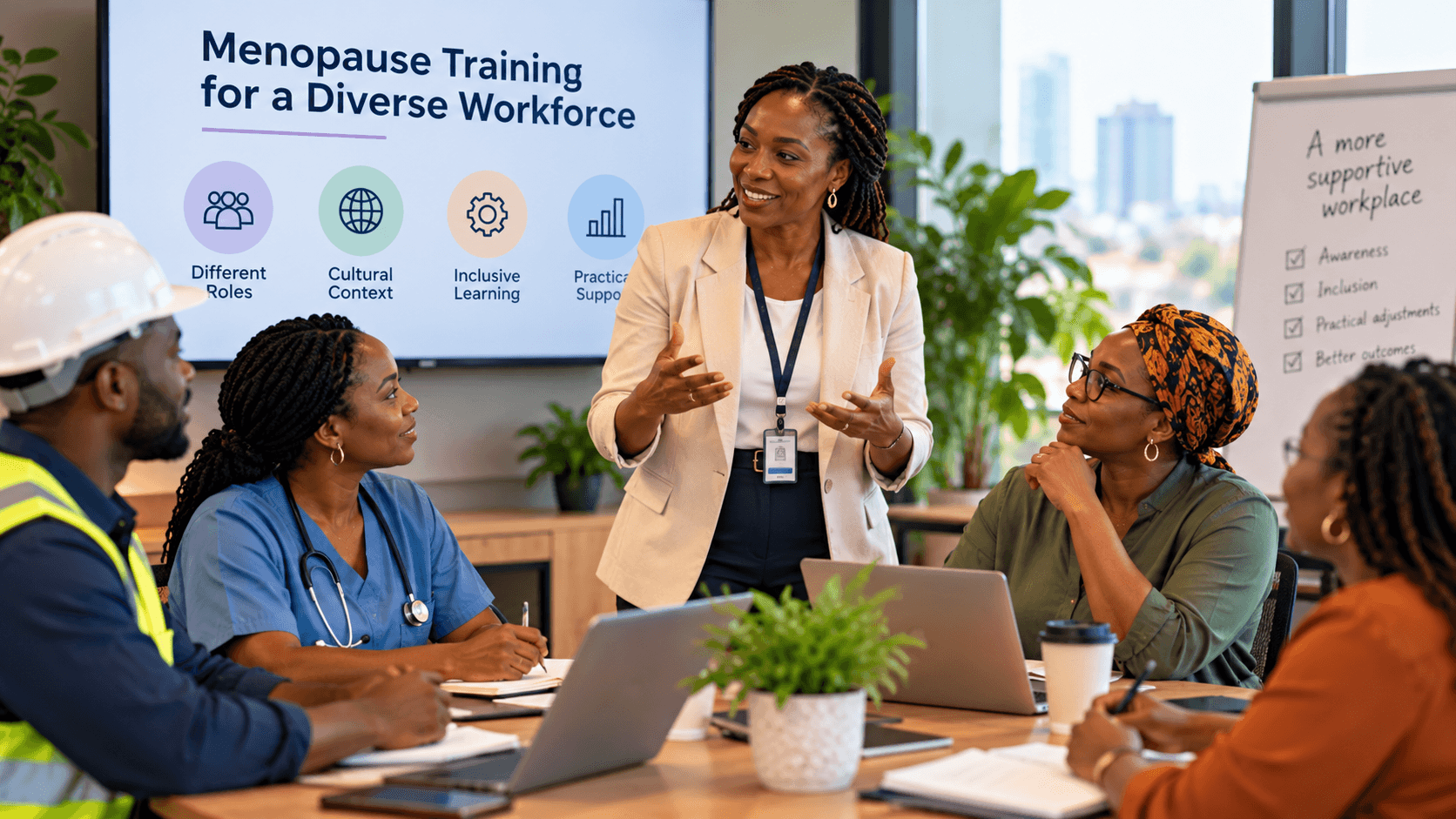
Menopause training is most useful when it reflects the people, roles and working conditions within an organisation. A single presentation may raise awareness, but it is unlikely to address the needs of a shift worker, a customer-facing employee, a line manager and a senior executive equally well.
For employers across Africa, effective training should account for differences in workplace culture, language, job autonomy, gender identity and access to support. This guide explains how to tailor training to those differences, deliver it consistently and evaluate whether it leads to meaningful changes.
Why Tailored Menopause Training Matters
Menopause and perimenopause may involve disrupted sleep, hot flushes, changes in concentration, mood symptoms and other experiences that can affect working life. Symptoms and their impact vary considerably. Training should help colleagues understand that variation without assuming that an employee’s performance or health can be explained by menopause alone.
The CIPD’s 2023 menopause workplace research offers useful evidence about reported symptoms and workplace experiences. However, its findings are based on a UK context and should not be presented as representative statistics for African workforces. Employers can use such research as a starting point while gathering confidential feedback from their own teams.
A report by the Fawcett Society also examines how menopause experiences can influence employment decisions. The business case for training includes retention, fairness and employee wellbeing, but employers should avoid promising that training alone will reduce absence or turnover.
Which Workplace Differences Should Training Address?
Cultural Context and Language
Employees may use different words to describe menopause, and comfort with discussing reproductive health varies across communities and workplaces. In multilingual organisations, training materials should use accessible language, explain medical terms clearly and offer translated or locally adapted resources where needed.
Avoid treating any African country or cultural group as having a single attitude towards menopause. Invite employees to identify communication barriers anonymously, and test examples with people from different teams before a wider rollout.
Frontline Roles, Shift Work and Job Autonomy
A remote employee may be able to adjust their working hours or environment. A nurse, factory worker, driver, retail employee or site engineer may have less control over breaks, uniforms and temperature. Training for their managers should therefore address realistic options: reliable water and toilet access, appropriate break cover, ventilation, breathable uniform alternatives and shift-planning flexibility where feasible.
Examples should be tailored to the organisation’s actual jobs. Do not present home working as a universal adjustment when many employees must be physically present.
Gender-Inclusive Participation
Menopause is commonly discussed in relation to women, but some trans men, non-binary and intersex people may also experience it. Inclusive training should use respectful language, protect privacy and avoid assumptions about who may need support. Colleagues of all genders can benefit from learning how to respond appropriately.
Acas provides guidance on menopause at work, including supportive conversations and inclusive practice. Employers outside the UK should adapt its recommendations to local laws and workplace realities.

Who Needs Which Training?
Different audiences require a shared foundation in menopause awareness, but their responsibilities are not the same. A useful programme distinguishes leadership, manager and employee learning objectives.
Executives and Senior Leaders
A short leadership briefing should focus on accountability, resourcing, retention risks, confidentiality and how support will be evaluated. Leaders need to understand what they are approving and who owns implementation. BS 30416 offers a reference framework for menstruation, menstrual health and menopause in the workplace, though it is not a substitute for local legal advice.
Line Managers and HR
Managers need scenario-based practice in discussing work-related needs without diagnosing symptoms or requesting unnecessary medical details. HR teams also need clear procedures for recording adjustments, handling sensitive information, escalating complex cases and reviewing outcomes.
For a deeper framework, see MAWA’s menopause manager training guide. Training should include examples for office-based, frontline and shift-based teams rather than a single generic script.
All Employees, Including Contract and Frontline Staff
General awareness sessions should explain common experiences, available support routes, confidentiality expectations and respectful colleague behaviour. Provide formats that people can access: short in-person briefings, mobile-friendly resources, recorded sessions or facilitated small-group discussions. Participation should not require personal disclosure.
A Practical Training Matrix
| Audience | Priority learning | Suitable delivery |
| Senior leaders | Accountability, resources and evaluation | Concise briefing and action review |
| Managers and HR | Conversations, adjustments and privacy | Scenarios, role-play and job-specific cases |
| Employees and frontline teams | Awareness, support routes and respectful conduct | Accessible short sessions and practical resources |
How to Build and Roll Out the Programme
1. Identify Needs Before Designing Content
Use confidential surveys, voluntary listening sessions and input from different locations and job families to understand what support employees can realistically access. Avoid collecting identifiable health details unless necessary, lawful and securely handled.
2. Adapt Scenarios, Not Just Terminology
Replace generic office examples with realistic situations from the workplace: a customer-facing employee who needs a short break, a shift worker with disrupted sleep or a manager responding to a request for a cooler workstation. Each scenario should lead to a practical decision, not simply greater awareness.
3. Prepare Managers and Support Contacts
Before a general launch, managers should know the organisation’s adjustment options, confidentiality rules and referral routes. MAWA’s guide to how leaders should talk about menopause and disclosures at work in Africa provides additional guidance for sensitive conversations.
4. Connect Training to Existing Policies
Training cannot compensate for unclear leave arrangements, inaccessible toilets or inconsistent management decisions. Align it with existing health and safety, flexible-work, privacy and employee-support policies. MAWA’s article on how employers can support workers experiencing menopause offers a broader view of practical workplace measures.
5. Make Participation Accessible
Schedule sessions across shifts, offer alternative formats and allow anonymous questions. Where internet access or data costs are barriers, provide offline materials or facilitated team briefings. Ensure contractors and workers outside head-office roles are not inadvertently excluded.
How Should Employers Measure Success?
Training attendance is only one measure. Assess knowledge and confidence before and after sessions, whether managers can identify appropriate support routes, whether employees know how to request adjustments and whether agreed changes are reviewed. Use aggregated feedback where possible and avoid publishing identifiable health information.
Review outcomes by role, location or shift pattern when group sizes are large enough to protect privacy. Evidence about the economic impact of menopause at work remains uneven across settings, so organisational decisions should be informed by local feedback rather than broad claims about guaranteed productivity gains. An LSE Business Review discussion highlights the importance of rigorous evidence when evaluating workplace menopause initiatives.
Frequently Asked Questions
Does every employee need the same menopause training?
No. Everyone benefits from a shared understanding, but managers, senior leaders and employees need different examples, responsibilities and levels of detail.
Should men attend menopause awareness sessions?
Yes. Managers and colleagues of all genders influence workplace culture and should understand respectful communication and available support.
How can small businesses tailor training affordably?
Start with a short manager briefing, clear support contacts and realistic workplace scenarios. MAWA’s guide to menopause support for small businesses without formal policies offers practical ideas for organisations with limited resources.
How quickly can results be measured?
Knowledge and confidence can be assessed soon after training. Changes in workplace experience and retention may take longer, and results depend on whether practical support accompanies the programme.
Conclusion
Inclusive menopause training is not about producing a separate course for every employee. It is about giving each group the knowledge and practical tools relevant to their work. Start by understanding workplace differences, equip managers to respond, connect learning to meaningful adjustments and review what employees say is working.