
Blog · Femtech Nigeria · Menopause Apps · Menopause Care · Menopause Nigeria · Menopause Support · Menopause Wellness · Perimenopause · Women’s Health Nigeria
Best Menopause Wellness Platforms in Nigeria: Guide

Let’s start with the corporate-sounding disclaimer nobody actually reads before I throw it out the window: menopause wellness platforms are digital and clinical support systems, ranging from medicine apps to diagnostic labs and community networks, designed to help women manage the hormonal transition through symptom tracking, medical consultation, and peer support. In Nigeria, this landscape is patchy at best, stitched together from a handful of local telehealth providers, diagnostic chains, international apps that weren’t built with Lagos traffic or Nair transactions in mind, and honestly, a lot of WhatsApp groups doing the heavy lifting that hospitals should be doing.
I say this as someone who has spent time digging through Nigerian health tech, and what struck me is how much of the actual menopause care happening in Nigeria isn’t happening in a clinic at all. It’s happening in a chat window. That’s not a knock on the women managing it that way. It’s a reflection of a system where specialist access remains concentrated in Lagos, Abuja, and Port Harcourt, leaving everyone else to improvise.
At a Glance
Platform & Payment: DoctorOnTap and SYNLAB Nigeria offer clinical support via Cash/Card/Paystack transfer payments; insurance compatibility is not automatic but can be claimed manually through your provider.
Platform & Payment: Flo and Clue provide symptom tracking through subscription apps accepting Card payments, with no insurance integration supported.
Platform & Payment: Balance delivers education via subscription requiring out-of-pocket payment and is not covered by Nigerian health insurance.
Platform & Payment: Grace Health and WhatsApp communities offer accessible support via Card/Cash payments, with no insurance compatibility.
Platform & Payment: Meno Haven focuses on peer support, which is Free/Donation-based and Insurance not applicable.
Cost and Access Context: While DoctorOnTap and SYNLAB offer structured payments, menopause-specific digital care remains largely out-of-pocket with limited insurance coverage.
DoctorOnTap
DoctorOnTap runs virtual consultations aimed specifically at midlife women, and it’s one of the few Nigerian telehealth setups that actually names menopause as a service category rather than burying it under “women’s health.” You get symptom tracking, guidance around hormone replacement therapy, and access to local physicians who understand that a 52 year old woman in Ikeja complaining of night sweats isn’t describing malaria. Consultations happen through the app, payment runs through standard Nigerian online payment methods including cards and bank transfer, and the whole thing is built around urban accessibility, meaning Lagos and Abuja users get the smoothest experience. Insurance compatibility is limited though; most users pay out of pocket, so if you’re expecting your HMO to cover a menopause-specific consult, don’t hold your breath.
Hermantra
Hermantra positions itself as a broader women’s wellness framework, blending digital health coaching with in-person touchpoints, and its menopause module sits inside a larger ecosystem of diet chats and midlife care content. What I find genuinely useful about Hermantra is that it doesn’t treat menopause as an isolated event but links it to metabolic shifts, mood, and long-term chronic illness risk, which is closer to how the transition actually behaves in real bodies. Payment structures vary depending on the coaching tier, and again, insurance coverage isn’t really part of the equation yet for most Nigerian users, so this remains a cash-and-card affair.
SYNLAB Nigeria
Here’s where things get clinical, in the good sense. SYNLAB Nigeria isn’t an app you chat through; it’s a diagnostic network offering hormone panels, FSH, LH, and oestradiol assays that give a woman actual lab-confirmed data on where she stands hormonally, rather than guessing from symptoms alone. Any doctor worth seeing will eventually ask for these numbers before prescribing hormone therapy, so SYNLAB functions less like a wellness platform and more like the backbone that makes the wellness platforms credible. Testing happens at physical clinic locations, billing is straightforward and paid directly, and there’s no pretending insurance smooths this over for most patients, since diagnostic testing in Nigeria still largely runs on out-of-pocket payment.
Meno Haven
Meno Haven is different animal entirely. Less telehealth, more movement. It functions as a support and advocacy network active in places like Lagos and Port Harcourt, organizing community health walks and pushing back against the cultural silence that still wraps around “the change” in a lot of Nigerian households. There’s real value here that a symptom tracker can’t replicate: the psychological relief of sitting in a room, or a WhatsApp thread, with other women going through the same hot flashes and mood swings and realizing you’re not losing your mind. Access is mostly free or community-funded, no billing structure to speak of, which honestly makes it more sustainable for lower-income individuals than any app with a subscription wall.
Flo App
Flo built its name as a period and fertility tracker, but its predictive engine scales surprisingly well into perimenopause, flagging erratic cycles before a woman even suspects what’s happening. Nigerian users, from what I’ve gathered browsing app reviews and community threads, lean heavily on the anonymous “Secret Chats” feature to talk about symptoms without the stigma that still clings to aging in local circles. The deeper symptom logs sit behind a paid plan, and payment runs through standard digital wallet or card checkout, no local currency quirks to worry about since it’s billed globally through app stores.
Clue App
Clue takes a colder, more clinical approach, no pink flowers, just data. Its real strength for Nigerian women is the export function: you can generate a clean PDF of your cycle length chaos and mood swings to hand a gynecologist during a rushed, expensive consultation, which matters a lot when specialist time is scarce and every minute with a doctor counts. Payment again runs through app-based subscription, no local insurance tie-in, and honestly that’s fine because what you’re really paying for is the data clarity, not medical care itself.
Balance App
Built by British menopause specialist Dr. Louise Newson, Balance is arguably the most medically rigorous free-to-use option on this list, packed with audio guides and unbiased information on hormone replacement therapy. The catch, and it’s a real one, is that HRT formulations discussed in the app aren’t always sitting on Nigerian pharmacy shelves, so a woman might get excellent information and then hit a wall trying to actually source the medication. Still, for self-advocacy, walking into a clinic already knowing the right questions to ask, Balance punches above its weight.
Grace Health
Grace Health was built for emerging markets, full stop, and that shows in how little data it demands. Its conversational bot interface delivers reproductive and midlife health information without draining your data plan, which matters enormously in a country where connectivity outside major cities can be genuinely unreliable. No heavy device requirements, no premium smartphone needed, just a lightweight digital footprint doing quiet, useful work for women who’d otherwise have no access to this kind of health information at all.
WhatsApp Support Groups
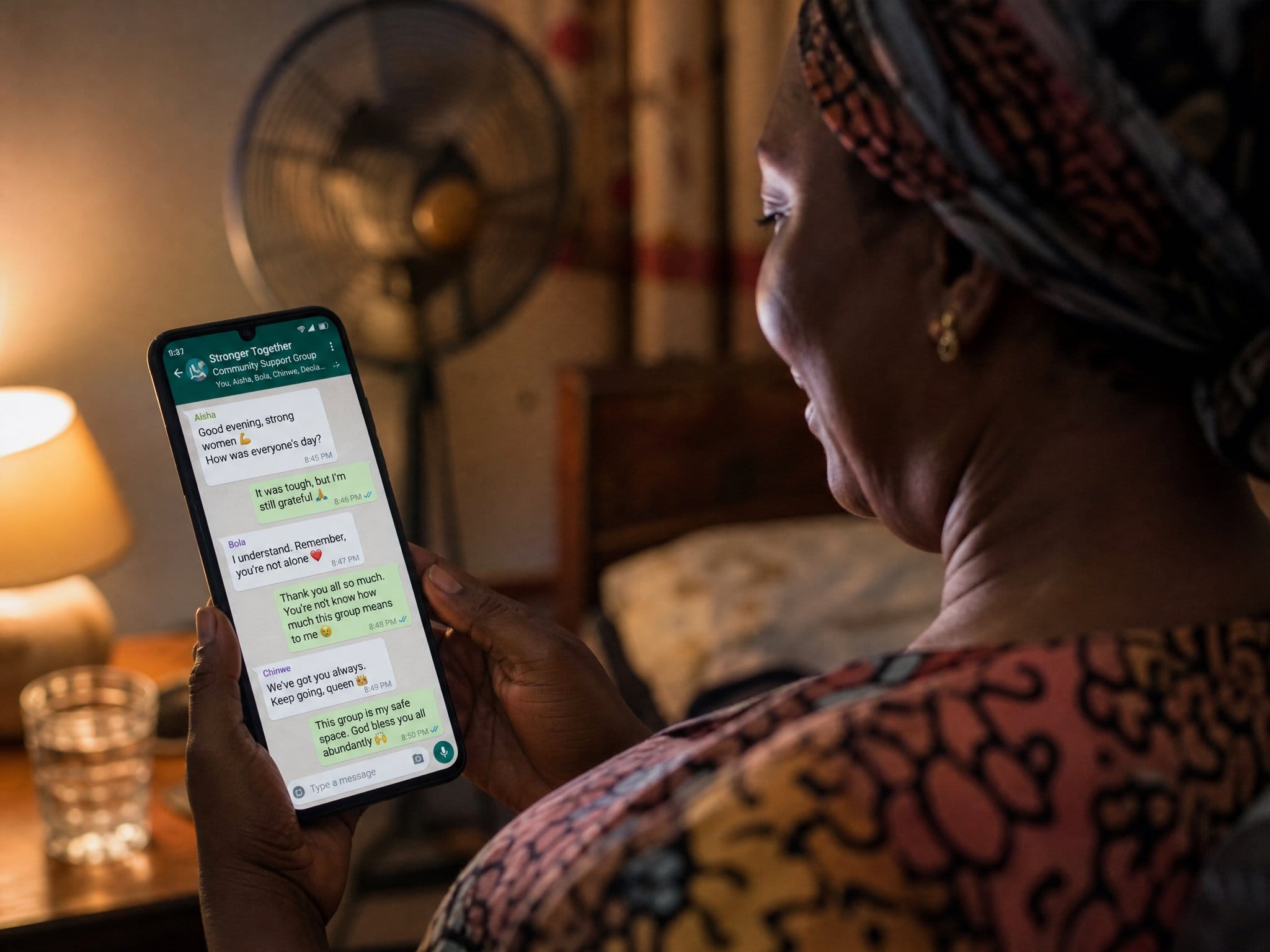
This is the unglamorous truth of menopause care in Nigeria: some of the most useful, real-time information doesn’t come from any app on this list. It comes from invite-only WhatsApp circles run by Nigerian wellness advocates or sympathetic gynecologists, where someone asks which pharmacy in Surulere still stocks estradiol gel and gets an answer within the hour. No interface, no subscription, no polished user experience, just raw, street-level utility that bypasses every formal system.
Quick comparison of what these platforms actually offer, because the differences matter more than the marketing:
Clinical depth: SYNLAB and DoctorOnTap offer lab-backed, physician-involved care; Flo, Clue, and Balance offer information and tracking, not diagnosis.
Cost structure: Most run on out-of-pocket payment; almost none integrate with Nigerian health insurance plans.
Local relevance: Grace Health and WhatsApp groups are built for low-bandwidth, low-cost access; Balance and Clue assume global infrastructure.
Femtech Nigeria Communities
Beyond named apps, there’s a growing scatter of femtech advocacy groups and forums specifically thinking through West African realities, tropical climates worsening vasomotor symptoms, local diets shifting midlife metabolism, and the particular cultural weight of discussing menopause inside Nigerian family structures. These communities don’t always have polished platforms or funding, but they hold context that imported apps simply can’t fake.
Conclusion
Put together, what Nigeria has isn’t a menopause care system so much as a patchwork, some clinical, some digital, some just women talking to other women because nobody else will. That patchwork works, sort of, but it works harder than it should have to.
What Are Menopause Wellness Platforms And How Do They Help?
They’re digital or hybrid services that combine symptom tracking, medical consultation, diagnostic testing, and peer community, aiming to close the gap between a woman noticing something’s wrong and actually getting a doctor to confirm it. The help isn’t uniform though; some platforms hand you data, others hand you a physician, and knowing which one you’re dealing with saves a lot of wasted time.
Why Does Menopause Understanding Matter For Nigerian Women?
Because the silence costs more than the symptoms do. Public health research keeps flagging that awareness around menopause in Nigeria stays low, and specialist access to hormone therapy remains largely locked to urban centers, pushing a large share of women toward informal remedies or faith-based coping instead of medical care. That gap doesn’t just affect comfort during hot flashes; it affects long-term risk for chronic illness like osteoporosis and cardiovascular conditions that hormonal decline quietly accelerates.
How Do You Choose The Right Platform For Your Needs?
Start with what you actually need solved. If it’s confirming hormone status, SYNLAB’s testing beats any app’s guesswork. If it’s daily symptom patterns, Flo or Clue does that better than a clinic visit ever could. If it’s emotional survival, Meno Haven or a trusted WhatsApp circle probably matters more than any specialist review score.
Can You Combine Multiple Platforms For Better Support?
Honestly, yes, and I’d argue most Nigerian women already do this without naming it a “strategy.” Lab testing through SYNLAB, symptom logging through Clue, community support through Meno Haven, information from Balance, that stacking approach covers more ground than any single platform manages alone.
FAQ
Do any of these platforms accept Nigerian health insurance? Rarely. Most operate on direct payment, cash, card, or transfer, with insurance coverage still largely absent from menopause-specific care.
Are these platforms suitable for rural Nigerian women? Grace Health and WhatsApp groups work best given their low data and device requirements; app-based Western platforms assume infrastructure that doesn’t hold outside major cities.
Is HRT actually available through these platforms? Information about it is, availability in pharmacies is the harder part, and that gap remains one of the biggest issues in Nigerian menopause care right now.