
Blog · Corporate Menopause Support · Employee Wellbeing · Menopause at Work · Menopause Manager Training · Workplace Wellbeing
7 Practical Tips for Managing Menopause Symptoms at Work
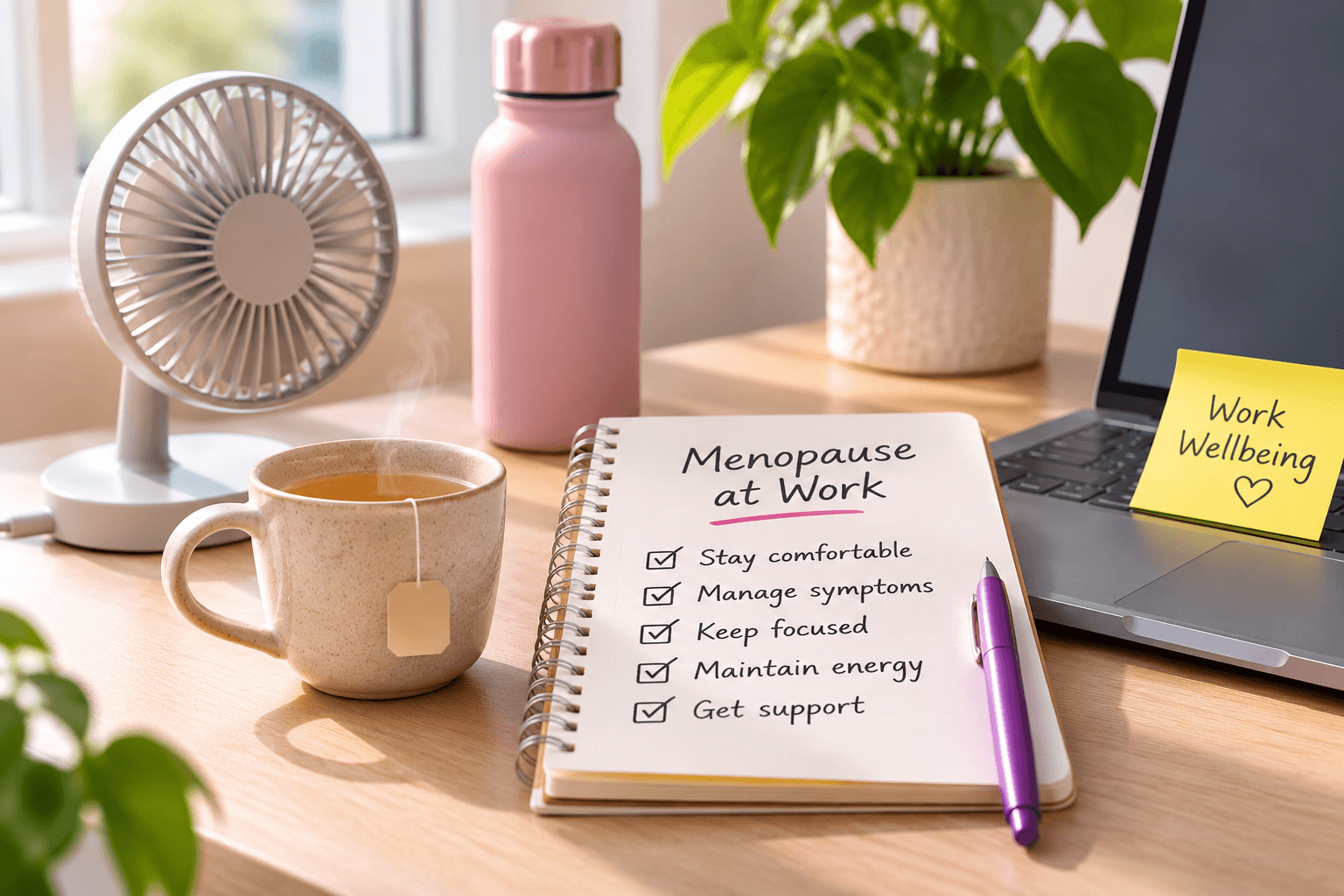
A woman may arrive at work after a restless night and find that tasks she usually handles comfortably require more effort. Later, a sudden hot flush interrupts a meeting, or she struggles to concentrate while several people are speaking. These experiences vary from woman to woman, but when they occur, even familiar work routines can become harder to manage.
Some women experience mild symptoms that require little adjustment. Others find that symptoms affect their comfort, confidence or daily work. Practical strategies can help, although what works often depends on the demands of the job and the support available. This guide looks at seven ways to respond to symptoms while recognising when healthcare advice or support from an employer may also be needed.
What Menopause Symptoms Can Affect the Working Day?
These changes can begin during perimenopause, the transition before menopause when hormone levels and menstrual patterns may fluctuate. Menopause is usually recognised after 12 consecutive months without a period, when there is no other medical explanation. During the transition, some women experience hot flushes, night sweats, sleep disruption, mood changes, difficulty concentrating or joint discomfort. Others experience few symptoms. The World Health Organization’s menopause guidance emphasises that experiences vary and that access to reliable information and care matters.
The impact on work may be subtle at first. Poor sleep may make a long shift more tiring, while a hot flush can be especially uncomfortable in a crowded or poorly ventilated room. Yet fatigue, anxiety and memory difficulties can have other causes, too. Rather than assuming that every change is related to menopause, it helps to consider what is happening, how it affects daily life and whether medical assessment is needed.
The Seven Tips at a Glance
- Manage hot flushes and workplace temperature.
- Protect sleep and manage daytime fatigue.
- Plan demanding work around concentration and energy changes.
- Take useful breaks and respond to stress.
- Maintain supportive daily habits.
- Track symptoms and know when to seek medical advice.
- Discuss workplace support and adjustments when needed.
1. Manage Hot Flushes and Workplace Temperature
A hot flush can be difficult to manage when it happens in the middle of a meeting or during a shift that offers little opportunity to step away. Breathable clothing, removable layers, drinking water and access to a fan may help some women feel more comfortable. These are practical options rather than guaranteed solutions, and not all of them will be suitable for every job.
The working environment can also make a difference. An employee in an office might benefit from better airflow or a seat away from direct sunlight. Someone working in a uniform, on a production floor or in protective equipment may have fewer choices. In those settings, a conversation about safe, workable changes is more useful than advice to dress differently.
It may also help to notice whether particular situations coincide with symptoms, without assuming that everyone shares the same triggers. The NHS’s practical guidance on managing menopause symptoms describes cooling measures and other self-care options, while MAWA’s article on managing hot flashes and brain fog during a busy workday explores how these challenges can arise at work. If hot flushes are frequent, distressing or affecting everyday activities, speak with a qualified healthcare professional. Cooling measures may ease discomfort, but medical treatment may also be appropriate.
2. Protect Sleep and Manage Daytime Fatigue
Poor sleep can make the working day more demanding, even when colleagues do not notice its effects. A woman who has been awake several times with night sweats may still arrive on time and complete her tasks, but concentrating through a long meeting or managing an early shift may take more effort than usual. Others may struggle to fall asleep or wake too early, even without night sweats.
A regular sleep routine, a comfortable bedroom and fewer interruptions from work messages late at night may make rest easier. However, good sleep habits do not resolve every menopause-related sleep problem. The NHS guidance on menopause symptoms identifies sleep difficulties among the changes that may occur, and persistent disruption is worth discussing with a healthcare professional.
When sleep problems begin to affect work, the next question is what can reasonably change during the day. Depending on the role, a temporary adjustment to start times, clearer task priorities or predictable breaks may help. MAWA’s guide to flexible working options for small teams offers a useful starting point for considering what different workplaces can realistically accommodate. Where fatigue could affect safety, such as in transport or clinical work, it is important to seek assessment and follow the organisation’s established safety procedures rather than relying on personal coping strategies alone.
3. Plan Work Around Concentration and Energy Changes
Changes in concentration can be particularly frustrating because they affect tasks that once felt straightforward. Someone may lose track of a discussion, need longer to recall a word or find it harder to switch between competing demands. These experiences do not automatically indicate a loss of ability, but they can signal that the way work is organised needs attention.
For people who can influence their schedules, it may help to complete demanding tasks during periods when they feel most alert. Written agendas, short meeting summaries and reminders can also reduce the pressure of remembering every detail at once. These are useful organisational habits that support concentration without calling anyone’s competence into question.
That flexibility is not available in every workplace. A teacher cannot simply move a lesson, and a nurse or shop worker may have limited control over busy periods. In such roles, clearer handovers, agreed priorities and dependable opportunities for a break may be more useful than being told to plan work around an ideal energy level.
4. Take Useful Breaks and Respond to Stress
Sometimes the most helpful response to an uncomfortable moment is a brief pause. Stepping away for water, stretching or finding a cooler space may allow someone to return to a task more comfortably. The length and type of break will depend on the symptom and the job; there is no single routine that works for everyone.
The same applies when stress makes concentration or mood more difficult. Slow breathing, a short walk or a quieter environment may help in the moment. But if pressure comes from an unmanageable workload, constant interruptions or a lack of breaks, an individual technique cannot address the underlying problem.
This is particularly relevant for employees whose duties cannot simply be paused. In healthcare, retail and other shift-based roles, breaks may need to be planned with colleagues or managers so that service and safety are maintained. The Menopause Society’s workplace consensus recommendations recognise that the ability to take breaks and the design of the working environment can affect symptom experiences. Support becomes meaningful when it is built into how the work is arranged, rather than left entirely to the person experiencing symptoms.
5. Maintain Supportive Daily Habits
Daily habits can support wellbeing during perimenopause and menopause, although they should not be presented as a cure for symptoms. Eating regularly, staying hydrated, moving when possible and allowing time for rest may help someone feel better overall. What is manageable will differ between a person with a predictable office schedule and someone working long or rotating shifts.
Small, manageable changes are therefore often more realistic than trying to overhaul an already demanding routine. Keeping water nearby, planning food around shifts or finding an enjoyable form of movement can be useful starting points. The NHS’s advice on lifestyle changes during menopause includes balanced eating, regular exercise and rest. These habits support general health, including bone and cardiovascular wellbeing, even though they will not eliminate every menopause symptom.
Products promoted as quick menopause solutions deserve particular caution. The NHS’s menopause treatment guidance notes that evidence for some herbal and complementary remedies is limited and that interactions with medicines are possible. If you are considering a supplement, a healthcare professional can help you weigh the possible benefits and risks rather than relying on marketing claims.
6. Track Symptoms and Know When to Seek Medical Advice
When symptoms come and go, it can be difficult to describe their impact during a medical appointment or workplace conversation. A short personal record may help. You might note when a symptom occurs, whether it disrupts sleep or work, and what seems to make the situation easier or harder. The purpose is to identify useful patterns, not to monitor every moment of the day.
Because these notes may contain sensitive health information, think about where you keep them and who can access them. You do not need to give an employer your full symptom history to explain that a particular working condition is difficult. If you choose to seek workplace support, you can usually begin by describing the practical impact and the change you are requesting.
A symptom record is not a diagnosis, and new or unusual changes should not automatically be attributed to menopause. Seek professional advice when symptoms persist, cause distress or interfere with daily life. The NHS’s overview of menopause treatment outlines hormonal and non-hormonal options that may be considered after an individual assessment. A clinician can discuss what is suitable for your circumstances, including support for hot flushes, sleep difficulties and mood changes.
7. Discuss Workplace Support and Adjustments When Needed
Sometimes, personal coping strategies are not enough, especially when working conditions make symptoms harder to manage. A woman who regularly struggles in an overheated room, for example, may need changes to ventilation rather than another cooling tip. Someone whose sleep has been severely disrupted may benefit from a discussion about working hours. Whether to raise the issue, and how much personal information to share, should remain a considered choice.
A helpful first step is to explain what has become difficult at work and suggest a practical adjustment. That might mean requesting access to drinking water, discussing a temporary change in start time or asking for written meeting notes. Not every request will be possible in every role, but a specific proposal gives the employee and manager something concrete to consider together.
Before approaching a manager or HR representative, it may help to think through four questions:
- Which part of your working day is becoming difficult?
- What specific change might help, and is it feasible in your role?
- Who is authorised to consider the request, and how will your information be handled?
- When could the arrangement be reviewed to see whether it helps?
Workplace policies and legal protections are not identical across African countries. Employees and employers should check the requirements that apply in their location rather than assume that a particular adjustment is automatically guaranteed. MAWA’s guidance on menopause manager training and its article on supporting employees experiencing menopause at work offer further guidance on responding to concerns constructively. Its guide to discussing menopause and workplace disclosures also explores how to approach these conversations without unnecessary pressure to share personal details.
What Can Employers Do Beyond Individual Tips?
The seven tips can help individuals identify what makes their day easier, but they cannot replace an employer’s responsibility to consider working conditions. Better ventilation, clear procedures for confidential conversations, manager training and workable break arrangements may benefit many employees, not only those experiencing menopause. MAWA’s guide to menopause support for small businesses without formal policies shows how organisations can begin with practical, consistent steps rather than waiting until they have a comprehensive policy.
Effective support begins with listening rather than making assumptions. Some employees will need adjustments; others will not. Some may wish to explain what they are experiencing, while others may prefer to discuss only the effect on their work. Respecting those differences helps create an environment in which asking for support feels possible.
Conclusion
Managing menopause symptoms during the working day often involves a combination of approaches. A cooling measure may make a meeting more comfortable, a change in routine may help after a difficult night, and medical advice may be important when symptoms persist. No single strategy will suit everyone, and what helps may change over time.
Start by identifying the symptom or working condition that is most difficult to manage, then consider one realistic change that could help. When the workplace contributes to the problem, employees should not be expected to resolve it alone. Combining personal strategies, appropriate healthcare and practical employer support can make it easier for women to continue working comfortably and confidently.